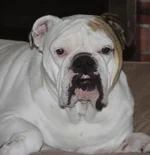
Aww poor Duke and you, I'm so sorry you're going through this. I hope Duke feels better soon, and the vet is able to treat and control his symptoms. Feel better soon Buddy. Please keep us posted on how he's doing.
I looked up pancreatitis in dogs and this is what it says :
Pancreatitis is an inflammation or swelling of the pancreas. It can be mild or severe. Dogs who take cortisteroids are at a higher risk, dogs with Cushings Disease, diabetes, and hypothyroidism are also at a higher risk of developing pancreatitis. These diseases are associated with high serum lipid levels. Pancreatitis is also more prevalent in overweight spayed female dogs, and dogs on high fat diets. An attack may be triggered by eating table scraps, getting into garbage, or a fatty meal.
Pancreatitis is characterized by the abrupt onset of vomiting, and severe pain in the abdomen. Abdominal pain is caused by the release of digestive enzymes into the pancreas and surrounding tissue. Diarrhea, dehydration, weakness, and shock may ensue.
Diagnosis may be suspected based on a physical exam, and is confirmed by a blood test, showing elevated amylase/ lipase levels. An abdominal ultrasound may reveal an enlarged or swollen pancreas.
Symptoms of mild pancreatitis are: loss of appetite, depression, intermittent vomiting, and weight loss.
Following an attack of pancreatitis, the pancreas may be permanently damaged, which can result in diabetes.
Treatment: Dogs with acute pancreatitis require hospitalization to treat shock, and dehydration. The most important step is to rest the gland completely. This is done by giving nothing by mouth for several days, and maintaining fluid and electrolyte balance with intervenous saline solutions. Antibiotics are used to prevent bacterial infections , and pain is controlled with narcotics.
Dogs who recover from pancreatitis are susceptible to recurrent attacks, which can be mild or severe. These episodes can be prevented by eliminating predisposed factors, such as placing overweight dogs on a weight- loss program. Feed the total daily ration of food in 2 or 3 smaller servings to avoid over stimulating the pancreas, and not feeding any table scraps to the dog.


 give him a big hug
  for me.


 we let him rest a good hour then I coaxed him with some ground beef and ice chips.. yes!!! he began to eat he had a little more but was walking so funny it was scary.. we decided to let him rest.. We all camped out on the living room floor with blankets and pillows. Duke slept til 5 am, he got up drank water ate about 1/4 cup of ground sirloin and rice and did pee pee and is back sleeping and he is walking 90 % better. I am going to do a lot of research on food. the vet said I must change to lower fat and I did see the Natures Variety has a low fat " praire " line.
  hopefully Duke will continue to rest!