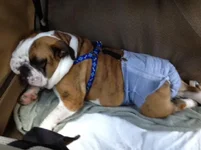
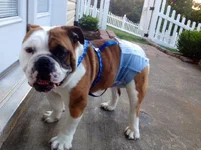
@
GatorRay - I'm not certain how this acupressure info will come across as I've copied and pasted it from Word - but I'm giving it a shot. Also, I should mention that this was done by the phenomial group at the University of TN for my Truman. I hope it helps! Pictures that correspond with the text are at the end.
CV 1:
LOCATION
On the ventral midline, halfway between the anus and the root of the scrotum or vulva
RELEVANT INDICATIONS
dysuria, urinary incontinence, prolapses
CV 3:
LOCATION
On the ventral midline, 4 cun caudal to the umbilicus
RELEVANT INDICATIONS
dysuria, urinary incontinence
CV 4:
LOCATION
On the ventral midline, 3 cun caudal to the umbilicus
RELEVANT INDICATIONS
dysuria, urine retention, urinary incontinence
CV 6:
LOCATION
On the ventral midline, 1.5 cun caudal to the umbilicus
RELEVANT INDICATIONS
dysuria, urinary incontinence
BL 19:
LOCATION
On the dorsolateral aspect of the spine, 1.5 cun lateral to the caudal border of the dorsal spinous process of T11
RELEVANT INDICATIONS
Liver Qi stagnation
BL 20:
LOCATION
On the dorsolateral aspect of the spine, 1.5 cun lateral to the caudal border of the dorsal spinous process of T12
RELEVANT INDICATIONS
Spleen deficiency, drain damp
On the dorsolateral aspect of the spine, 1.5 cun lateral to the caudal border of the dorsal spinous process of L2
RELEVANT INDICATIONS
Urinary incontinence, kidney Yin and Qi deficiency, pelvic limb weakness
BL 26:
LOCATION
On the dorsolateral aspect of the spine, 1.5 cun lateral to the caudal border of the dorsal spinous process of L6
RELEVANT INDICATIONS
Kidney Yang and Qi deficiency, urinary incontinence, L-S pain
BL 28:
LOCATION
In the first sacral intervertebral space (S1-S2), 1.5 cun lateral to the dorsal midline between the sacrum and the medial border of the wing of the ilium
RELEVANT INDICATIONS
Dysuria, urinary incontinence, L-S pain
BL 39:
LOCATION
On the lateral end of the popliteal crease, on the medial border of the biceps femoris muscle tendon
RELEVANT INDICATIONS
Dysuria, urinary incontinence, L-S pain
SP 6:
LOCATION
On the medial side of the pelvic limb 3 cun proximal to the tip of the medial malleolus in a small depression on the caudal border of the tibia (directly opposite GB 39)
RELEVANT INDICATIONS
Master point for the caudal abdomen and urogenital tract; tonifies
Yin and blood; genital discharge, pelvic limb paresis or paralysis, urinary incontinence, sleep disorders,
Yin deficiency
On the craniolateral aspect of the pelvic limb, 0.5 cun lateral to the cranial aspect of the tibial crest, in the belly of the cranial tibialis muscle
RELEVANT INDICATIONS
Master point for GI tract and abdomen; gastric ulcers, food stasis, generalized weakness, general
Qi tonic (Rear limb 3 mile point), stifle pain, hind limb weakness
GB 39:
LOCATION
Directly opposite SP 6 on the medial aspect of pelvic limb
RELEVANT INDICATIONS
Neurologic disorders, anal/perianal disorders
LI 11:
LOCATION
On the lateral side of the thoracic limb at the lateral end of the cubital crease, halfway between the lateral epicondyle of the humerus and the biceps tendon with the elbow flexed
RELEVANT INDICATIONS
Immune mediated disorders, point for deficiency disease patterns
GV 1:
LOCATION
In the depression on the dorsal midline between the anus and the ventral aspect of the tail
RELEVANT INDICATIONS
Anal/perianal disorders, paresis/paralysis of the anal sphincter
GV 14:
LOCATION
On the dorsal midline in the depression in front of the dorsal spinous process of the T1
vertebrae (the first palpable dorsal spinous process going from cranial to caudal)
RELEVANT INDICATIONS
Opens the back and the rest of the spine
On the dorsal midline on a line drawn from the tips of the ears level with the ear canals
RELEVANT INDICATIONS
Calming point, prolapse
Bai Hui:
LOCATION
On the dorsal midline between L7 and S1 vertebrae
RELEVANT INDICATIONS
Yang deficiency, pelvic limb paresis or paralysis, lumbosacral pain
KI 3
LOCATION
In the depression ventral to the medial malleolus of the tibia, between the malleolus and the talus
RELEVANT INDICATIONS
TONIFY KIDNEY; urogenital disorders
TH 5
LOCATION
At the most distal t/6 the distance of the craniolateral antebrachium from the carpus to the cubital fossa (2 cun above the carpus), caudal to the tendon of the common digital extensor; at the distal end of the interosseous space between the radius and ulna, 1-2 cm deep
RELEVANT INDICATIONS
CLEARS WIND HEAT; opening the Dai Mai
LI 4
LOCATION
Between the first and second metacarpal bones at the level of the head of the first metacarpus
RELEVANT INDICATIONS
dermatologic disorders, pain in the head and neck, pain in the forelimb and shoulder, acupuncture analgesia, neurodermatitis
GLOSSARY:
Cun: Chinese unit of anatomical measurement. i.e. The length of the first tail vertebra is equal to one cun. The width of the last rib is equal to one cun
Yin: the feminine passive principle in nature that in traditional Chinese medicine is exhibited in darkness, cold, or wetness and that combines with yang to produce all that comes to be
Yang: the masculine active principle in nature that in traditional Chinese medicine is exhibited in light, heat, or dryness and that combines with yin to produce all that comes to be
Damp: In traditional Chinese medical theory, excessive dampness is a major cause and consequence of disease. The nature of dampness is to moisten and nourish, but also to clog and obstruct. It’s intimately related to digestion, and when it gets to be excessive, it can initiate, or by itself be the source of many health complaints. Excess dampness is usually reflected by signs and symptoms of sluggishness and stagnation. It has a turbid, heavy, and sticky nature and it can obstruct the proper function of body processes, especially digestion, elimination, and all fluid metabolisms.
Dai Mai: binds all the Channels which run up and down the trunk, thereby regulating the balance between the upward and downward flow of Qi in the body. It deals with fullness and distension of the abdomen, pain and weakness of the lumbar region, and motor impairment of the lower limb. Indications include fullness and distension of the abdomen, irregular menstruation, leucorrhoea, prolapse, pain or weakness in the lumbar region, weakness or motor impairment of the lower limb, redness and pain of the eyes, vertigo.
http://www.amazon.com/gp/product/0890877904/ref=pe_226970_25216310_email_r_im
http://www.englishbulldognews.com/forums/attachment.php?attachmentid=25939&d=1345234936
http://www.englishbulldognews.com/forums/attachment.php?attachmentid=25938&d=1345234909
http://www.englishbulldognews.com/forums/attachment.php?attachmentid=25937&d=1345234894
http://www.englishbulldognews.com/forums/attachment.php?attachmentid=25936&d=1345234883

 He also has poor anal tone and I can always tell when he needs to go. When we first got him he had horrible bowl issues, bloody colitis, constipation, just aweful. A specialist told me to try yogurt and sure enough, worked like a charm. Haven't had any issues since. He gets Activia at each meal and he's goes like clockwork. Regular walking also helps keep him regular.