I stole this from the article Helene left a link to in case someone elses dog has this issue it will be on here.
Cystine stones
Cystine is a sulfur-containing amino acid essential to the health of skin, hair, bones, and connective tissue. Excess cystine is normally filtered by the kidneys so that it doesn’t enter the urine, but some dogs are born with cystinuria, an inherited metabolic disorder that prevents this filtering action. When cystine passes into the urine, it can form crystals and uroliths.
Cystine stones are rare, representing 1 percent or less of uroliths identified in laboratories. Although any breed can develop cystinuria, certain breeds are most affected. An estimated 10 percent of male Mastiffs have cystinuria. It is also common in Newfoundlands, English Bulldogs, Scottish Deerhounds, Dachshunds, Staffordshire Bull Terriers, and Chihuahuas. Cystine stones are faintly radiopaque, which makes them more difficult to see on X-rays than stones that contain calcium.
There are at least two types of cystinuria. The more severe form affects Newfoundlands and, rarely, Labrador Retrievers, and possibly some other breeds and mixes. In these dogs, males and females are equally affected (though as always, males are more likely to become obstructed). The age at onset can be as young as 6 months to 1 year. Recurrence of stones following surgery is more rapid in these dogs, and they are more likely to form kidney stones. The gene that causes cystinuria in these breeds has been identified and a simple, reliable genetic test can identify both affected dogs and carriers.
In other breeds, dogs with cystinuria are almost always male. No genetic test is available for them, though the University of Pennsylvania School of Veterinary Medicine (PennVet) is collecting blood samples from affected Mastiffs and their genetic relatives to try to produce a DNA test. The average age at onset of clinical signs is about 5 years.
A basic urinalysis can sometimes detect cystine in urine, though this is the least reliable method of detection. A nitroprusside (NP) test performed at the University of Pennsylvania (PennGen) is considered more reliable. A quantitative amino acid analysis performed by PennGen or a human medical laboratory is most reliable but very expensive. If cystine is found in the urine on any of these tests, the diagnosis is considered positive for cystinuria, though that doesn’t necessarily mean the dog will form stones.
Unfortunately, a negative result on any of these tests does not guarantee that the dog is “clear.” Note that sulfa drugs and supplements, including sulfa antibiotics, MSM, and Deramaxx, may cause false positive results.
“Cystinuria is a particularly frustrating condition to manage,” says San Francisco Chronicle pet columnist Christie Keith, who started a Canine Cystinuria e-mail list and website when one of her Scottish Deerhounds developed cystine uroliths. “A dog known to have cystinuria may go his whole life without obstructing, while another dog, never diagnosed, can have a life-threatening obstruction as his first symptom. It’s not known at this time why some dogs with cystinuria form stones and others do not.”
Cystine, like all amino acids, is one of the building blocks of protein. That’s why most veterinarians (including many kidney specialists) prescribe a low-protein diet, speculating that reducing the cystine supply will reduce the formation of cystine stones. Another common recommendation is to alkalize the dog’s urine because cystine stones form in acid urine.
Unfortunately, says Keith, these strategies are ineffective. “Most of us on the Canine Cystinuria list have found that diet and urinary alkalization have failed to prevent our dogs from forming stones,” she says, “and they have sometimes caused other problems, including other types of stones that form in alkaline urine. If the urine goes into acidity even briefly, cystine stones can form and they won’t dissolve just because alkaline urine is achieved soon after. In addition, feeding ultra-low-protein diets can be dangerous, especially to giant breeds and breeds prone to cardiomyopathy.” (See “The Side Effects of Low-Protein Diets,” page 13.)
It’s important to provide your dog with extra fluids and frequent opportunities to urinate in order to keep his urine from becoming supersaturated. Salt should not be added to increase fluid consumption for dogs with cystinuria; according to studies conducted on humans, a low-sodium diet may decrease the amount of cystine in the urine.
If urine alkalization is attempted, the target pH is 7.0 to 7.5; higher can predispose dogs to calcium phosphate uroliths. Potassium citrate is preferred for alkalization when needed rather than sodium bicarbonate because sodium may enhance cystinuria.
Cystine stones cannot be dissolved with diet or supplements, but two prescription drugs can help dissolve and prevent them. Cuprimine (d-penicillamine) has potentially serious side effects but is less expensive and more readily available, and many dogs do well on it. According to Keith, Thiola (tiopronin, also referred to as 2-mercaptopropionylglycine or 2‑MPG), has fewer side effects, but one of them is the depletion of the owner’s bank account. Maintaining a giant-breed dog on Thiola can cost as much as $500 per month. Because the severity of cystinuria tends to decline with age, the dosage of preventative medications can sometimes be decreased or even stopped.
Dissolution requires a combination of medication, low-protein diet, and urinary alkalinization. Even then it may not be successful or practical for a dog with numerous stones. When it does work, dissolution commonly takes one to three months.
For some dogs, the solution has come not from prevention strategies or medication but from surgery. “It sounds extreme,” says Keith, “but many of us who have stone-forming male dogs with cystinuria have opted for a scrotal urethrostomy. This surgery redirects the dog’s urethra away from the penis to a new, surgically created opening in front of the scrotum.”
Cystinuria
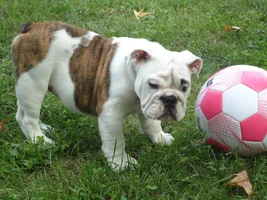
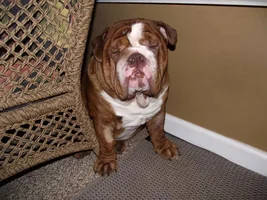
About 10 percent of male Mastiffs have cystinuria; itfs also common in Newfoundlands, English Bulldogs, Scottish Deerhounds, Dachshunds, Staffordshire Bull Terriers, and Chihuahuas.
The wider opening that results enables males to more easily pass small stones and help prevent urinary blockages. “While future obstruction is not impossible,” says Keith, “this procedure reduces the risk substantially.” Still, she cautions, this surgery should not be undertaken lightly. It’s expensive, requiring the expertise of a skilled board-certified surgeon, and because the affected area is rich in blood vessels, there can be significant post-surgical bleeding, though the surgery is not particularly painful.
“The good news,” she says, “is that many dogs, including stone-formers and those who had serious complications when their condition was first diagnosed, have lived not just normal but longer-than-normal lives.”


 but there are other options... raw or honest kitchen


 Tyson loves it. I have no experience with stones, but I know that we went through numerous kibbles before ending up with The Honest Kitchen, and Tyson has done WONDERFUL on it. We do the base mix, and add in our own protein (Lean ground beef)